
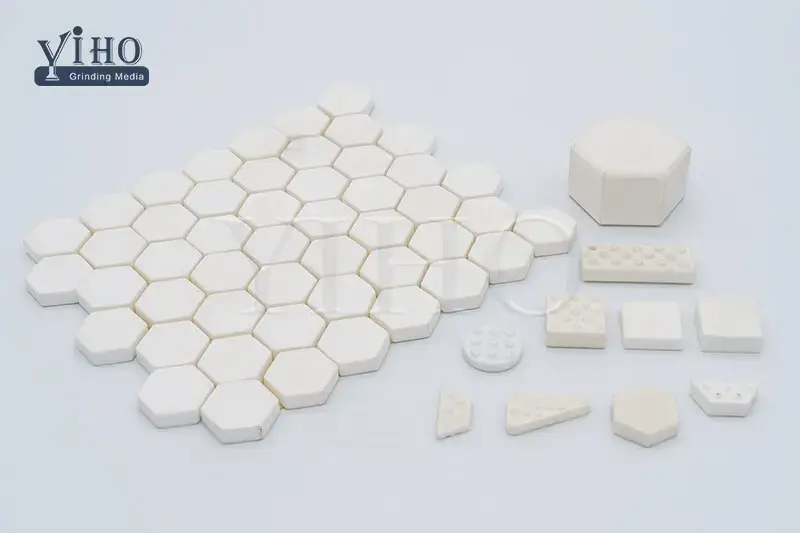
In heavy industries such as mining, cement production, and bulk material handling, equipment failure due to abrasive wear is a persistent challenge. Ceramic wear plates provide a robust solution, offering superior protection compared to traditional steel linings. These plates are typically fabricated using high-purity technical ceramics, primarily aluminum oxide (Al₂O₃) or zirconia toughened alumina (ZTA), bonded to a steel backing plate. This composite structure leverages the extreme hardness of ceramics to resist particle erosion while utilizing steel for structural support and impact absorption.
The performance of ceramic wear plates is defined by their ability to withstand severe sliding wear, impact, and chemical attack. Alumina ceramics, with a Mohs hardness of 9, effectively resist scratching and gouging from sharp, abrasive materials like iron ore, coal, and clinker. For applications requiring enhanced toughness, zirconia-based plates are employed to prevent chipping under heavy impact loads. These plates are often installed in high-wear zones such as chutes, hoppers, cyclones, and transfer points, significantly reducing downtime for maintenance and replacement.
Modern ceramic wear plates are engineered for easy installation using welding, bolting, or adhesive bonding methods. Their lightweight nature reduces the overall load on structures, while their smooth surface finish minimizes material buildup and flow resistance. By incorporating these advanced liners, industries achieve extended service life for critical components, resulting in lower operational costs and improved process efficiency in the most demanding environments.
FAQ
Q1: What materials are used in ceramic wear plates? A: The most common materials are high-purity sintered alumina (Al₂O₃) for general abrasion resistance and zirconia toughened alumina (ZTA) for high-impact applications. These are usually backed by mild steel or stainless steel.
Q2: How are ceramic wear plates installed? A: They can be installed via three primary methods: welding the steel backing to the substrate, using mechanical bolts through pre-drilled holes, or applying industrial structural adhesives.
Q3: Where are ceramic wear plates typically used? A: They are essential in mining equipment, power plant chutes, cement kilns, steel mills, and any bulk handling system where severe abrasive wear occurs.